Illustration services
Botanical Illustration Commissions
A good botanical illustration shows a plant the way a botanist sees it and the way a gardener loves it. I draw commissioned plant portraits and full botanical plates, from a single flower to the whole plant with its flowers, fruit and seeds.
- Drawn from living or pressed specimens
- Whole plant and details on one plate
- Color or black and white
- Checked by a botanist when it matters
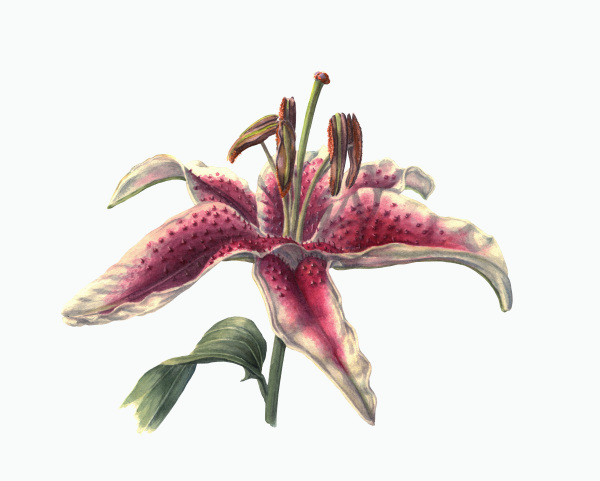
What a botanical commission can be
Plant work ranges from a single portrait to a technical plate for a scientific description. All of it starts with the plant itself.
Plant portraits
A single flower, branch or specimen plant, drawn with care for a garden, a collector or a gift.
Full botanical plates
The habit of the whole plant with enlarged flowers, fruit and seeds arranged on one page, as in my plate of African rice.
Line drawings for research
Black-and-white figures with scale bars for species descriptions, floras and identification keys.
Identification plates
Related species drawn in the same pose, scale and light so readers can compare them side by side.
Garden interpretation
Art for plant labels, trail signs, guidebooks and visitor panels in gardens and arboretums.
Product and packaging art
Accurate plant art for seed packets, catalogs and labels, where a customer needs to recognize the plant.
- Watercolor and colored pencilColor plates and portraits where color identifies the plant.
- Pen and ink or graphiteLine and tonal work for research figures and one-color printing.
- Digital finishLabels, layouts and later corrections without repainting.
Plants I have drawn
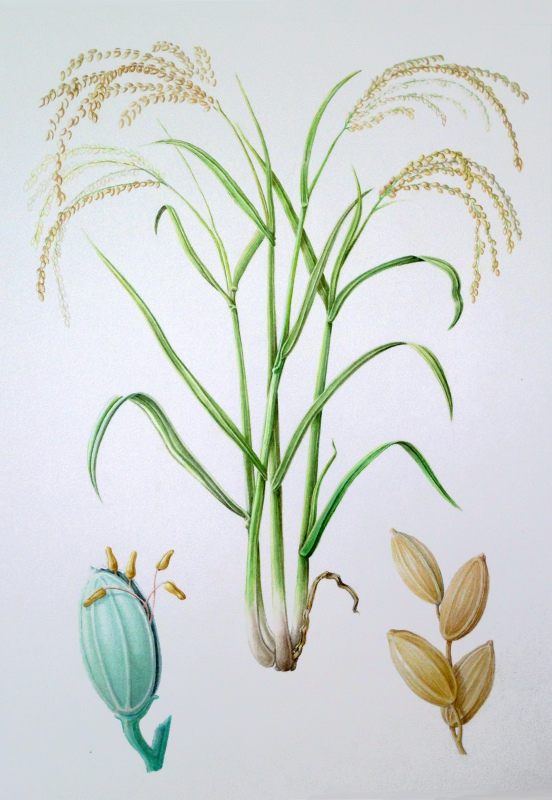
African rice (Oryza glaberrima): the whole plant with an enlarged floret and grains. 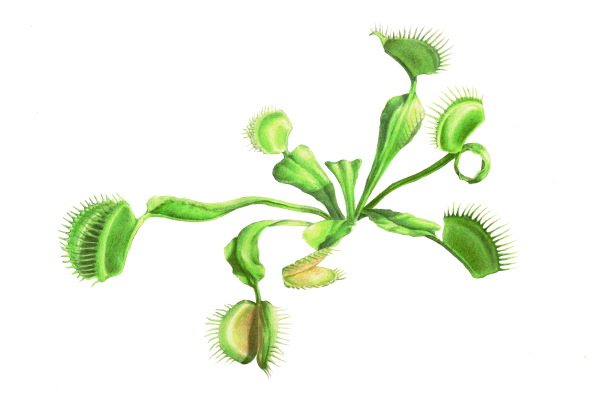
Venus flytrap (Dionaea muscipula), with traps in different states on one plant. 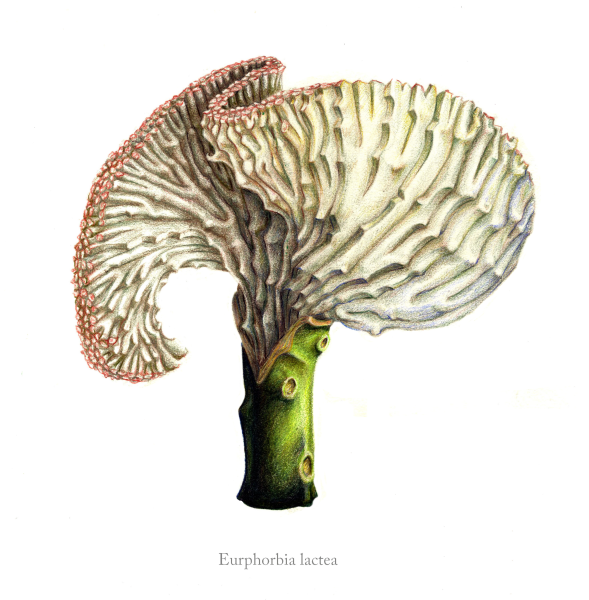
Euphorbia lactea, crested form, in color. 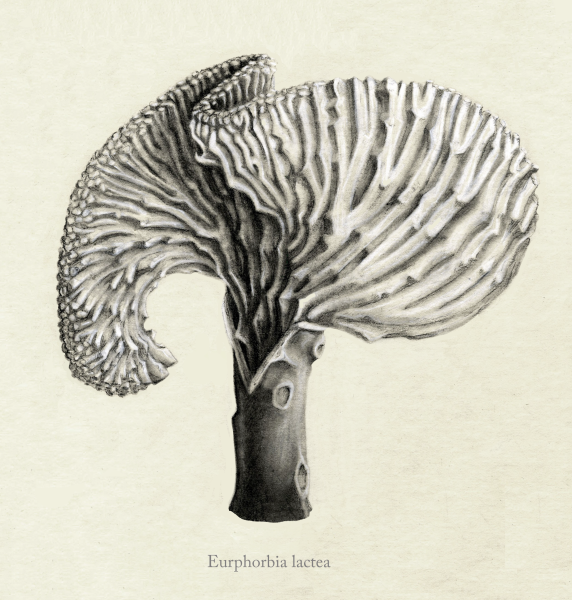
The same plant in black and white, for one-color printing.
More plates and species portraits are in the gallery.
See the gallerySpecimens, seasons and accuracy
Plants keep their own calendar. A plate that shows flowers and fruit together may need two sessions months apart, so it pays to plan around the season.
What I can work from
- Living plants, the best reference of all
- Cut material sent fresh, where practical
- Herbarium or pressed specimens for structure
- Your photographs and measurements, taken to a short list I send
- Published descriptions and the advice of your botanist
How I keep it accurate
I measure and count before I draw: petals, stamens, leaf arrangement, the shape of the leaf margin. These are the features a botanist checks first. For research plates, a specialist reviews the pencil drawing before it is rendered, and every enlarged detail carries a scale.
A plant portrait for a private client gets the same care. If the plant in your garden has a quirk, I can draw it as it is or as a typical example of its kind. We decide that at the start.
Who I work with
- Botanical gardens and arboretumsInterpretive signs, guidebooks, membership gifts and exhibits.
- Publishers and authorsPlates and figures for floras, field guides, gardening books and textbooks.
- Researchers and herbariaLine drawings for species descriptions and identification keys.
- Nurseries, seed companies and growersAccurate plant art for catalogs, packets and labels.
- Private clientsA portrait of a treasured plant, a garden or a gift.
How a commission works
Brief
You contact me with the plant, the intended use, the size, color or black and white, and your schedule.
Proposal and agreement
I reply with questions, an approach, a timeline and a quote. Scope, review rounds and rights are agreed before work begins.
Specimens and references
We arrange the plant material and references, timed to the stages the plate needs to show.
Pencil drawing and check
A detailed pencil drawing goes to you, and to your botanist if there is one, for accuracy and layout.
Final art
I render the final in the agreed medium and send it for a last review.
Delivery
High-resolution files to your specifications, with labels and scale bars on separate layers when needed.
Rights are licensed for the uses you need and written into the agreement. I explain how that works in Illustration Licensing: What Publishers Should Know, and what affects the fee in How Much Does Scientific Illustration Cost?
Frequently asked questions
Can you draw a plant from my own garden?
Yes. The living plant is the best reference there is. If I cannot see it in person, I will ask for cuttings where that is practical, or for photographs and measurements taken to a short list I send you, ideally at more than one stage of growth.
Can you work from herbarium specimens?
Yes. Pressed specimens keep their shape and structure but lose their color, so for a color plate I combine them with color notes or photographs of the living plant.
Do I get the original artwork?
Usually the original stays with me and you license the image for your uses. If you would like to own the original, for a collection or as a gift, say so in the brief and it will be priced into the agreement.
How long does a botanical plate take?
It depends on the plant, the number of details and the season, since some parts can only be drawn when the plant is in flower or in fruit. I give an honest schedule in the proposal.
Have a plant in mind?
Tell me about the plant, where the illustration will be used and when you need it, and I will reply with questions and a proposal.