Illustration services
Custom Natural History Illustration for Museums
An exhibit panel has a few seconds to catch a visitor and a few minutes to teach them something. I make natural history illustrations for museums, nature centers, parks and interpretive programs.
- Exhibit panels and trail signs
- Reconstructions built on evidence
- Reviewed by curators and educators
- Files to your fabricator's specifications
How I keep the science right
Every image is researched, checked by your curators and scientists, and tested for readability by your educators.
Research
I start with your interpretive plan and the research behind it, then read the primary sources for each subject and note the features a specialist would check first.
Specimens and site visits
When the project and schedule allow, I draw from your collection or visit the habitat or site. Otherwise I work from specimens, photographs and measurements you supply.
Consulting with your team
Curators and scientists review the drawing for accuracy. Educators review it for readability, because a correct image that visitors cannot read has not done its job.
Review rounds
The agreement sets the review rounds, typically at the sketch stage, at a color study and before final delivery.
I grew up on a rugged property in the South Carolina wetlands near the Pee Dee River, with no neighbors for 20 miles in any direction, and most of what I learned as a child came from watching the land around me. Good interpretive art gives visitors a little of that attention: it shows them what to notice.
Art for exhibits, trails and interactives
Exhibit panel illustrations
From a single species portrait to a large habitat scene with many plants and animals in their correct places.
Interpretive sign art
For trails and overlooks, drawn to read at a glance outdoors, in changing light, from a few steps away.
Species plates and identification panels
Consistent scale, pose and lighting let visitors compare similar species side by side.
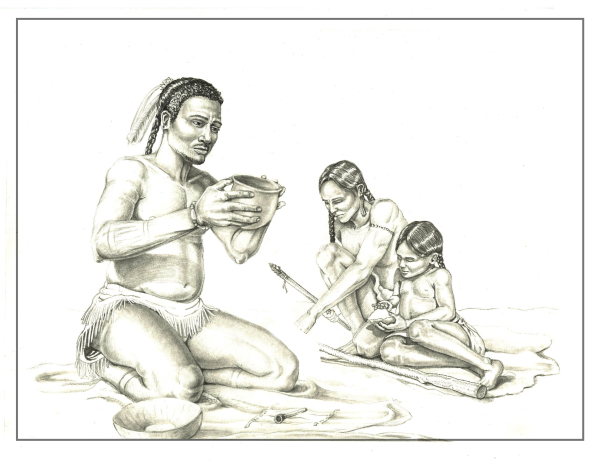
Reconstructions
Extinct animals, past environments and archaeological scenes.
Cutaways and process diagrams
What visitors cannot see: a burrow underground, the inside of a seed, a life cycle.
Art for digital interactives
Supplied in layers so it can be revealed step by step on a touchscreen or used on your website.
- GraphiteQuiet, detailed reconstructions.
- Watercolor and digital paintingColor habitat scenes and species plates.
- Digital finishPanel work is usually finished digitally so it can be adjusted during exhibit design.
Reconstructions built on evidence
Reconstruction is the part of this work that needs the most care. Nobody can photograph an extinct animal or a household from centuries ago, so every element in the picture has to come from somewhere.
Where each detail comes from
- A specimen
- A published description
- An artifact
- An excavation record
- A judgment made by the curator or researcher
When something is uncertain
We decide together how to handle it:
- Show the most likely option
- Keep the detail vague
- Leave it out
I keep a reference log for each reconstruction that notes where each detail came from. Docents and educators can use the same log to answer visitors' questions.
Plates, portraits and life cycles
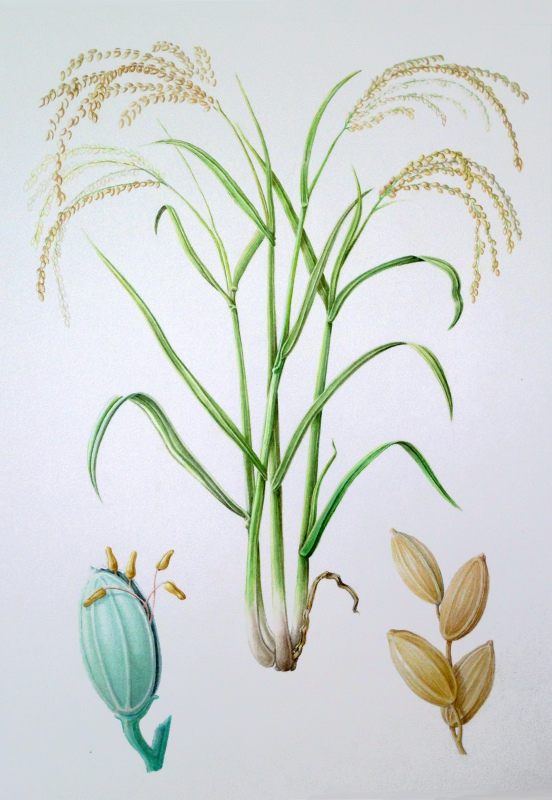
African rice (Oryza glaberrima). Plates like this work well on identification panels and in exhibit catalogs. 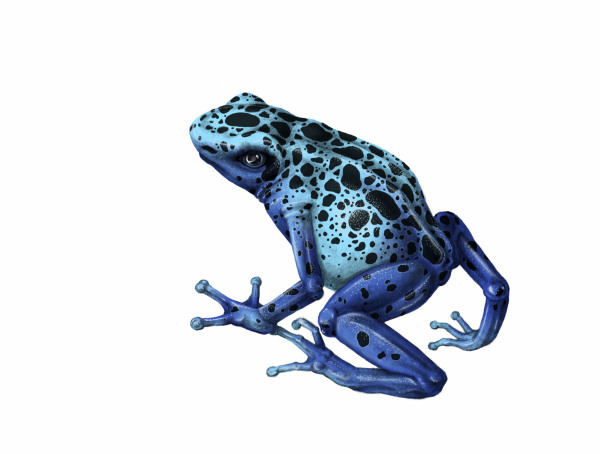
Poison dart frog. 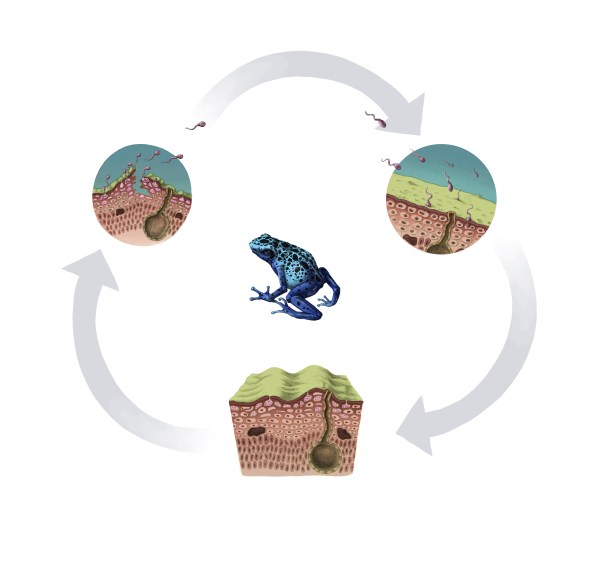
Chytrid fungus life cycle, with cutaways of amphibian skin around the host frog. 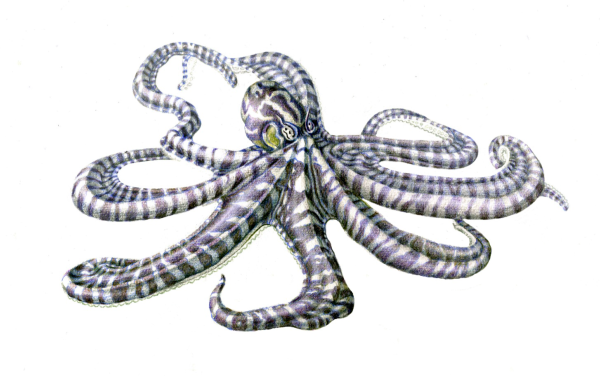
Mimic octopus (Thaumoctopus mimicus).
More species plates, reconstructions and life cycles are in the gallery.
See the galleryWho I work with
- Natural history and science museumsPlanning permanent galleries or temporary exhibits.
- Nature centers, botanical gardens, zoos and aquariumsSpecies identification panels and teaching graphics.
- Parks, wildlife refuges and land trustsInterpretive trails, overlooks and visitor centers.
- Archaeology and history museumsScenes of daily life reconstructed from excavated evidence.
- Exhibit design firmsAn illustrator who can work within your panel system, grid and fabrication specifications.
How a commission works
Brief
You contact me with the exhibit topic, the number and size of panels, your audience, and the opening date.
Proposal and agreement
I send a proposed approach, schedule and quote. We agree on scope, review rounds and rights before work begins.
Research and references
I review your content, gather references and, where possible, visit the collection or site.
Sketches
Compositional sketches go to curators and the exhibit designer for content, layout and space for text.
Color study and test print
For color work I make a color study, and I recommend a test print at full size on the final material.
Final art and delivery
Final files go to your designer or fabricator at the agreed specifications, and I stay available to check proofs.
What you receive and how you can use it
Files, formats and large-format print
- Exhibit graphics at full panel size, at the resolution your fabricator specifies. Large panels seen from a distance often need less resolution than a book page, while small labels need sharper art, so I confirm the specification first.
- Layered files that keep the illustration, labels and background separate.
- Web and screen versions for your website or interactives.
Outdoor sign materials can print colors differently from paper, so a proof on the actual material is worth the time.
Rights and licensing
Exhibit commissions are usually licensed for the exhibit and its related materials:
- The panels themselves, the exhibit catalog, education programs and the institution's website.
- If the exhibit may travel, or you are considering prints or merchandise, mention it at the brief stage so the license can cover it.
- Exclusive rights and buyouts are possible and are priced to match.
I usually keep the copyright and the original art, and I may show finished work in my portfolio once the exhibit opens.
Frequently asked questions
Can you work with our exhibit designer and fabricator?
Yes. I can work to their grid, color palette and file specifications, and I prefer to be in touch with the designer early so the art leaves room for text.
We are a small nature center. Do you take on single panels?
Yes. A single trail sign or one species panel is a welcome project, and the process is the same, just shorter.
How do you handle uncertainty in a reconstruction?
We agree on it with your curator or researcher. Well-supported details are shown clearly, and uncertain ones are kept neutral or left out. I document every choice in the reference log.
Do you need to visit in person?
Not always. A visit helps, especially for site reconstructions and habitat scenes, but I can work from specimens, measurements and photographs you provide.
Planning an exhibit or a trail?
Tell me about the topic, the panels and the opening date, and I will reply with questions and a proposal.